Ukraine is central to the future security of Europe, — Lord Wood of Anfield
 Olena Rebryk
 Vlad Bundash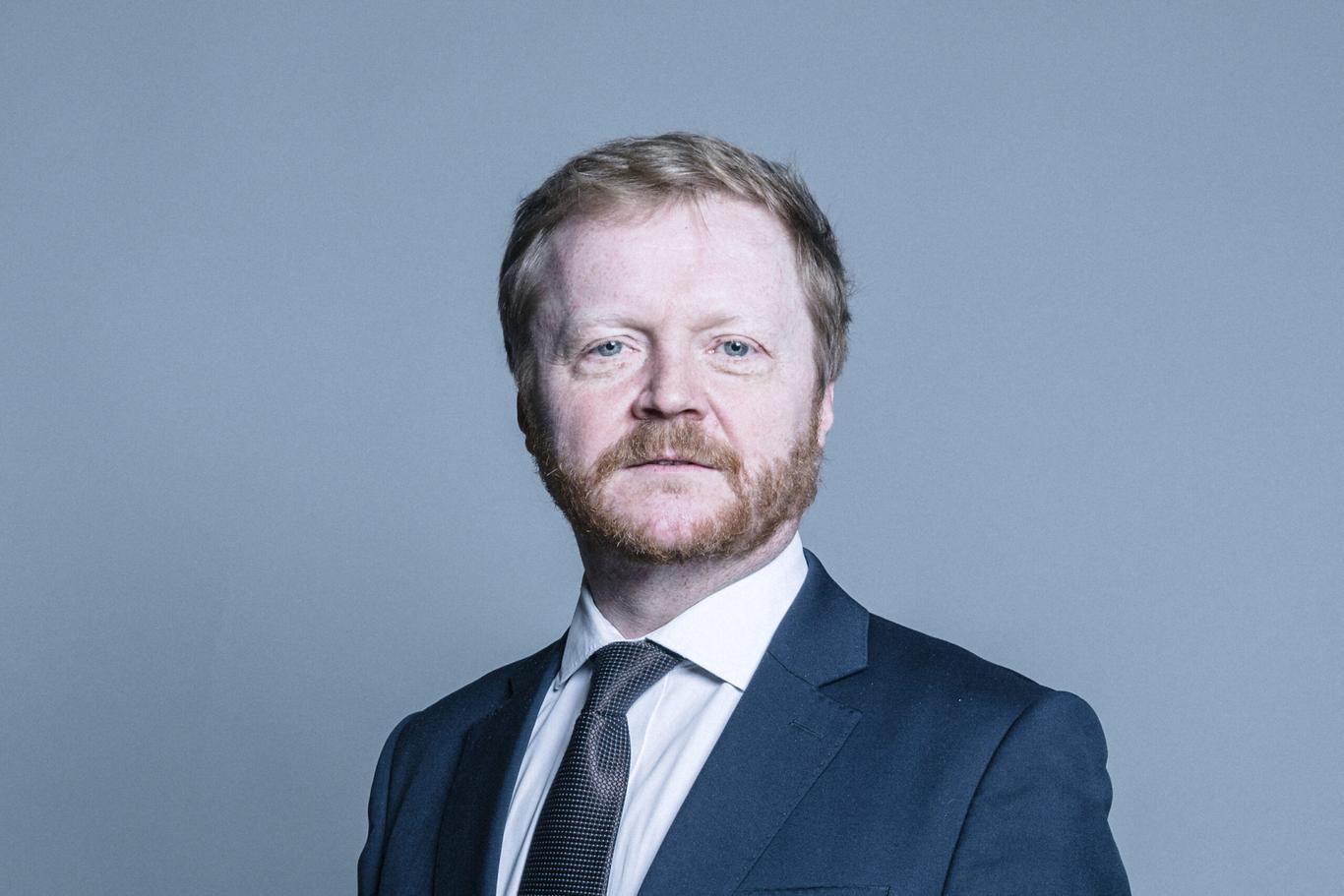

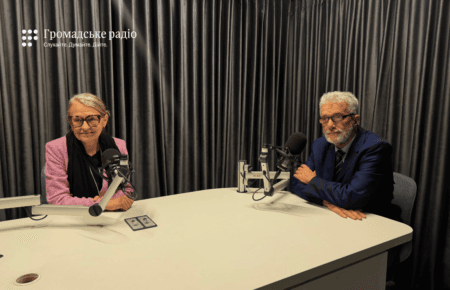
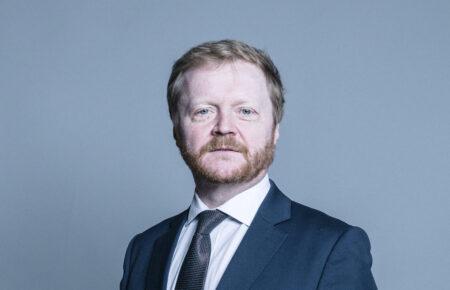
Hromadske Radio spoke with Stewart Martin Wood, Baron Wood of Anfield, Parliamentary Under-Secretary of State, about his impressions of Ukraine, the importance of international cooperation, and mutual support in difficult times.
«I`ve witnessed the very real dangers that people experience here day to day»
Vlad Bundash: Lord Wood, thank you for your time and thank you for joining us. And I want to say that I considered, it’s very important to hear for our audience, for our target audience and for Ukrainians, how United Kingdom supports Ukraine and the British support Ukraine in different fields. You are in Ukraine right now, but we turn back to this point in the end of our conversation.
But I want to start with your role. You are now responsible, accountable for security, first of all, for Eastern Europe, for defence and international security. How do you see the main security challenges facing Ukraine and Europe as a whole today?
Lord Wood: Well, let me start by saying it’s a real pleasure to be speaking with you and to speaking to your listeners as well. And it’s been a wonderful privilege to be here in Ukraine the last couple of days. With regard to your question, I went to Chernihiv yesterday and saw in a part of Ukraine, the very real dangers that people experience day to day with the number of drones and attacks increasing there, disrupting daily life every single day.
Here in Kyiv, as people who live here know, I’ve also witnessed the disruption that happens routinely here.
The most important thing at the moment is that the Russians are using all sorts of weapons, in particular, the jet powered drones to inflict damage, not just on business and energy infrastructure, but on civilians as well. And that’s the primary challenge that you all face. So we’re proud to say that we are amongst the best friends that Ukraine has.
We’ve been supporting you. We will continue to support you with military support. And we’re going to continue that into the future.
But our Prime Minister also mentioned something yesterday when he was in New York, which is an important aspect of security for Ukraine, as it is for many countries in Europe, which is the challenge of Russian disinformation and the role that disinformation plays in undermining security more broadly. And that’s something that we can work together on long into the future as well, I hope.
«This winter will be extremely difficult again. And all Ukraine’s friends and allies need to be able to respond»
Vlad Bundash: You`ve mentioned about russian attacks on our energy infrastructure. And we know that Ukraine is facing another winter of war. And Russia is once again targeting Ukraine’s infrastructure, energy infrastructure. And United Kingdom has already announced a winter support package, including for air defence.
What can Ukraine and Ukrainians expect from United Kingdom this season and this winter?
Lord Wood: Well, you’re absolutely right that we’ve given a significant amount in support for your energy infrastructure to get the repairs in place for the winter to enable you to take the protective measures. We also know that there will be a difficult winter ahead. Last winter, I know, was very difficult.
This winter will be extremely difficult again. And all Ukraine’s friends and allies need to be able to respond as the challenges change and develop over the next few months. And our Prime Minister again yesterday said that there will be more support to come, but we need to be led by you, by your government, by your mayors, your cities, the needs that you have as a country.
We will continue to provide energy support just as we are providing military support and support for humanitarian programmes like the ones I’ve been visiting in my time here in Kyiv. And that support is going to be provided as long as it takes. But I go back to this point, that we will be guided by the needs that your cities and your country has in the kind of support that we will have.
And we will also be talking to our friends and allies across Europe and elsewhere like Canada to encourage them to be responsive to the kinds of needs, whether it’s generators, whether it’s repairs, whether it’s parts, whatever kinds of needs that you will need as you approach what might be a tough winter, we’re going to be standing by you.
«The attack on Ukraine is the most important challenge to European security since World War Two»
Vlad Bundash: Yes, it’s very important. The UK has spoken a great deal about the need for a new European security architecture. What role do you see for Ukraine within this architecture? And what role, that UK prepared to play in shaping it?
Lord Wood: Well, Ukraine is central to the future security of Europe. I mean, the challenge that the Russian invasion, the attack on Ukraine is the most important challenge to European security, in my view, since World War Two. And the UK, even though we left the European Union 10 years ago, the UK has in the last 10 years, partly as a result of the response to the Russian attacks on Ukraine and Russian invasion, has got much closer to the European Union.
We have a new defence partnership with the European Union. We’ve played a leading role, as you know, in the so-called Coalition of the willing, trying to get countries across Europe and elsewhere to stand squarely behind Ukraine and to support Ukraine in the challenges ahead. There’s a new issue emerging, though, I think, which is that Europe is going to have to take much more responsibility for its own collective defence, that NATO is evolving in ways that mean that Europe is going to have to take more of a lead.
«I’m proud to say that Ukraine and my country have a 100-year partnership»
And as President von der Leyen of the EU said last week, that involves Ukraine, Norway, Britain, as well as countries in the European Union. So the security arrangements in the future in Europe are going to be involving Britain and Ukraine in partnership with the European Union in new ways that I think we’re already starting to think about and develop, and we’re going to have to do together.
And of course, on top of that, I’m proud to say that Ukraine and my country have a 100-year partnership which spans across different aspects of policy cooperation, but in particular is focused on security and defence. So that will be a tie that connects the Ukraine and the United Kingdom for a long time, well into the future, for generations to come. And that will be at the heart of the European approach to security.
«What I’ve seen here are thousands and thousands of individual stories of suffering, of resilience, of courage»
Vlad Bundash: I see that Europe and European countries understand that Russia is our common enemy and we need to build this security, global security infrastructure. And at the end of our interview, I want to ask you about your visit to Ukraine.
You are in Ukraine right now. What do you see as the key outcome of your visit? And what will be taken from Kyiv to London, both as political messages and in terms of concrete decisions?
Lord Wood: Well, yes, thank you. I’ve been seeing many people here. I’ve seen members of Parliament, the Rada. I’ve seen senior ministers here, civil society organisations. I’ve visited amazing projects which look after defenders and veterans and their rehabilitation.
I’ve been to meetings looking at civilians who’ve been detained and children who’ve been abducted from the temporarily occupied territories. I’ve looked at a range of things. What’s the main thing I’ve taken away? I guess two or three things.
The first thing is that we talk about Ukraine at war with Russia. But actually, what I’ve seen here are thousands and thousands of individual stories of suffering, of resilience, of courage. And that human side of the war is something you can only really get a feel for when you’re visiting a country and you’re welcomed, as I have been, by people in Ukraine.
Secondly, I’m going to take back that the kind of support that United Kingdom offers has to change with the needs of Ukraine. Of course, it’s military. Of course, it’s humanitarian. But it’s also planning for a future of Ukraine. It’s helping Ukraine deal with the daily lives that everyone has to live, despite the fact that you’re facing these terrible attacks day to day. So the kind of support we offer has to be flexible and responsive to the needs you have.
And the third thing is to have a determination that, with a winter ahead, which, as I said before, will be difficult, with an unknown 2027 ahead, you have financial challenges, you’ll have military challenges, that the friendship you get from our country across different departments, across different political parties has to be solid. I’m proud to say that all political parties in my country are strongly supportive of Ukraine. It’s something that is shared across our country, across different views in politics.
And I’m going to try and play a role in strengthening that commitment as we go forward into 2027 and further.
Vlad Bundash: Absolutely. Lord Wood, thank you for finding the time for this interview. And I also want to say from Ukrainian society, thank you for UK government, the British, for you supporting Ukraine in different fields. And we are feeling your responsibility and it’s very important, because we are feeling that we’re not alone. And also, I want to thank you for supporting independent media, Ukrainian outlets.
And thank you for supporting Hromadske Radio, because we have transmitters on the frontline, and we are covering our brioadcasting, our programmes on the occupied territory. And it’s very important that we have your support. Thank you.
Lord Wood: And thank you for what you do as well. And thank you for the extraordinary, inspiring courage of ordinary Ukrainians across the country, including the occupied territories. And also thank everyone for the incredibly warm welcome I’ve had. I’ve been made to feel very at home here with friends, which is what I am.
- Lord Wood of Anfield was appointed Parliamentary Under-Secretary of State at the Foreign, Commonwealth and Development Office on 23 July 2026. He served as a member of the Labour Shadow Cabinet and as a senior advisor to Ed Miliband during his leadership of the Labour Party from 2010 to 2015. Prior to this, he was a foreign policy adviser to Prime Minister Gordon Brown from 2007 to 2010.