«We need to support both the International Criminal Court and the Special Tribunal for the Crime of Aggression», — Mark Ellis about accountability for Russia
 Andriy Kulykov
 Olena Rebryk
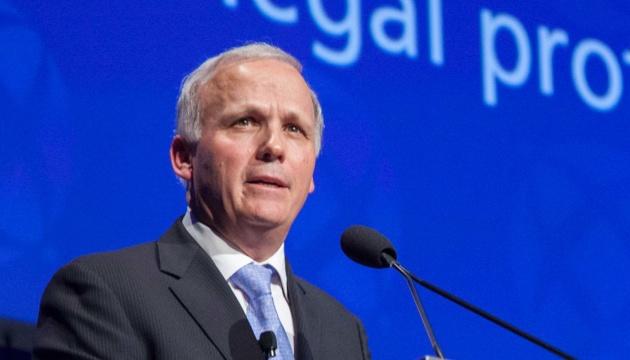

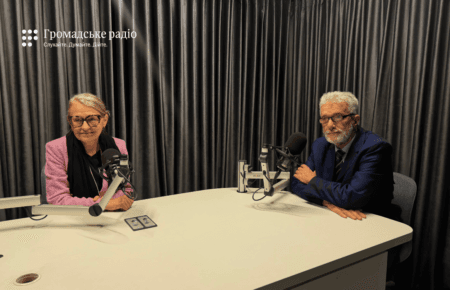
Hromadske Radio spoke to Mark Ellis — Doctor of Law, Executive Director of the International Bar Association (IBA), Adjunct Professor at Florida State University College of Law. We discuss the Kosovo Tribunal, the international experience of justice and the probability of such implementation against Russia.
Andriy Kulykov: A few days before the interview with Mark Ellis, I read about the conviction for the crimes of the former president of Kosovo, Hashim Tachi, and I decided to start a conversation with Mark Ellis about this.
First of all, it is a very significant case of the head of state, who leaves office and voluntarily surrenders to international law. And as a result, he receives a serious term of imprisonment. What do you think, Dr. Ellis, what is the probability that this can happen to Putin or to the people around him?
«In Kosovo, there was a political will to support responsibility”
Mark Ellis: Well, let me say this, what we saw in the Kosovo Tribunal, which as a special court, is quite unique, because it was facilitated by, and structured by, Kosovo itself. And that’s unusual for a domestic national support system for creating a mechanism to bring, to look at the accountability of somebody accused of type of judicial mechanisms, particularly focused on a head of state.
But it was in collaboration with Kosovo. So that I think is really quite unique in international justice. On that point, we will not see that in Russia.
We rarely see countries initiate these types of judicial mechanisms, which is why international justice plays such an important role and why the International Criminal Court and now the Special Tribunal for the Crime of Aggression, in relations to what Russian leaders have done towards Ukraine, is of necessity. So that’s the difference.
It’s the political willingness that existed in Kosovo to support accountability, even if it meant in the end that these four suspects, these four defendants were found guilty, including a former head of state.
It’s an extraordinary step, not generally supported in Kosovo. So that makes it more remarkable to me that the Tribunal was created even though the general public was against it.
Again, there is really no opportunity to undertake a similar approach in relations to Vladimir Putin, which is why we need to support both the International Criminal Court and the Special Tribunal for the Crime of Aggression.
«I look at Ukraine as a country that has set an approach to accountability and justice»
Andriy Kulykov: For some, the decision of the Kosovo tribunal, or rather the Kosovo court, was met with some uncertainty in Ukraine. Some say, the leader of the National Liberation Movement and that’s why we need to be careful about the future actions of international justice in relation to the Russian-Ukrainian war. Such people say that there is a risk that Ukrainians will also be tried on charges of war crimes of the same magnitude as the Russians. What do you say to this, Dr. Ellis?
Mark Ellis: Well, I say first, I see Ukraine as a country that has established an approach to accountability and justice. Through domestic proceedings Ukraine has been very adamant that those who have committed crimes against Ukraine and against Ukrainians must be brought to justice.
But international justice is colorblind. It does not particularly care who’s committing the crimes. It cares about ensuring that those who do commit the crimes are held accountable, and it does so primarily for the victims.
In my interactions with Ukrainians over the past almost five years, while visiting Ukraine, Ukrainians, I think, generally understand this principle. They realize that for Ukraine to take a seat at the international table, as it will, that they have to accept the responsibility of ensuring that international law is upheld . Sometimes that will mean holding to account Ukrainians, but that’s part of the responsibility of being, a member of the international community.
Russia has no interest in adhering to international law; it has no desire to do that. That’s a significant difference between Ukraine and Russia. It’s the same thing about the undertaking domestic trials against Russian soldiers, either in person or in trials in absentia, and providing those individuals, the rights that are guaranteed under international law. Russia does not do that. Ukraine does.
I understand the emotional response of saying, why would we ever want to provide rights to Russian defendants? Why do we concern ourselves with ensuring that a defendant is given a fair trial? Why would we concern ourselves with that? The reason is because you want to have the legacy here in Ukraine as a country that upheld international standards of impartiality, fair trials. This is something Russia simply has not done and will never do.
That’s the difference, and I think Ukrainians should embrace that difference, even though difficult; as part of Ukraine’s legacy as it continues to play this significant role in the international community.
«The vast number of people I meet here in Ukraine are committed to justice»
Andriy Kulykov: Some may call you an idealist, Dr. Ellis, because the Ukrainian judicial system is riddled with corruption scandals and all that, and you believe that Ukraine is capable of accepting the principles and ideas you’re talking about. I think so too, but I’m an ordinary person and you’re an expert. What do you base your thoughts on?
Mark Ellis: Sometimes I wake up in the morning when I have heard another story about corruption here in Ukraine, even with those individuals that I’ve worked with, and it depresses me, I have to tell you that.
But I quickly get over that for two reasons. One is because I believe those individuals are still in the minority. The vast number of people I meet here in Ukraine are committed to justice, they’re committed to a functioning government, they’re committed to the rule of law.
And this is what, gives me hope and the commitment to continue to engage here in Ukraine. Second, I alluded to this earlier, even though there are fault lines that exist within Ukraine, as they exist in every country, I truly believe that Ukraine is deserving of being able to be seen as a country with a legacy of upholding the rule of law, and upholding justice. And as difficult as that challenge is, particularly in the time of a war, I have this great belief that Ukraine will succeed in this endeavour.
And I stand by that commitment. I feel it in my soul for this country and for its people. So I get sometimes disappointed, but I get myself back up and move forward.
Andriy Kulykov: But to what extent do these scandals and assertions and some proven cases of corruption influence your cooperation with Ukrainians? Of course, you are a strong person and many people support you, but I am sure that the consequences of corruption are marked in your work.
Mark Ellis: I don’t think there’s any question about that. I think what it does is place a legitimate question among those that are engaged with providing assistance to Ukraine as to why do we do so if there’s a continuation of corruption and that these acts are inconsistent with my belief about what Ukraine is about. So I think it is damaging.
And of course, unfortunately, it also plays into the hands of Vladimir Putin and Moscow who might say, «you see this is the type of country you’re supporting”. So unfortunately, it really does play into Russia’s hands.
However, again, I remain absolutely convinced that as damaging as corruption can be, there is still on this other side of this equation, a vast commitment by Ukrainians and its officials to do this right and to continue to fight for this justice and the rule of law that is so critical for Ukraine.
Andriy Kulykov: For example, you have been dealing with certain people working on certain methods and tools and suddenly these people are fired or they run away or something like that. And the circle of people you have to work with sometimes or completely changes and you have to make new efforts to build working relations with these new people. Is this a serious problem or have you already learned to overcome it?
Mark Ellis: Well, it’s a great question; it’s a penetrating question. First, I would say it can be disappointing.
Second, it’s challenging. You’re absolutely right. What happens is that in a quick second, the structure that existed and that I worked with, disappears.
And it’s a structure that has been involved with some very important movements and developments within Ukraine. And so all of a sudden the structure disappears, you’re looking into a black hole. And yet the issues are still there.
They’re still important. So what’s the response? Well, within Ukraine it’s quickly trying to fill that gap; it’s trying to find other players who can come in and continue the effort. But that’s not easy, because they have to get up to speed.
They have to have the expertise. And you have to find that expertise. And they have to go through a learning process of getting up to speed on the issues.
This takes time. And for myself or others, it means that we’re no longer on that road of momentum. We now witness a delay.
But these are the realities that you have to face. And you simply accept it and you move on.
And that’s what I’ve tried to do.
Andriy Kulykov: Your honor, your efforts to establish a special tribunal to punish crimes are huge. From our previous conversations I know that you are well aware of the obstacles on this path. Of course, they are not only connected to Ukraine. Now, after several years of great efforts and sensuous progress, how do you see new phenomena that you didn’t anticipate when you started your efforts?
Mark Ellis: I actually think I have seen some of these developments, but actually in a fairly positive way. This past year, 36 states came together and the EU came together to move this special tribunal from an idea to a legal reality. That’s extraordinary. And I think we have to remind ourselves that within a relatively short period of time, this structure, this legal structure, this tribunal has been given birth.
That’s an extraordinary achievement. And so I still feel that there’s good momentum on the Special Tribunal. An example is that the Netherlands has indicated that the tribunal now will be housed in The Hague. I didn’t know if that decision would come as quickly as it did.
«I’ve been pleasantly surprised as to the development and the progress of the tribunal»
There’s still challenges. We have states that have indicated support for the enlarged partial agreement but has to go through a process of domestic ratification. But there’s a structure here.
I think the process is moving in a very positive direction. No question, there’ll continue to be hurdles. But to your question, I haven’t been disappointed.
I’ve been pleasantly surprised as to the development and the progress of the tribunal. And this is something we’re working very hard on to support Ukraine and the Council of Europe on.
Andriy Kulykov: We hope that this will continue as you have imagined. But I suddenly thought, how will the war end? Although I don’t believe that the war will end soon. By the way, there are foreseen changes in the political circles of European countries. And they will say, «listen, we have peace now. Let’s not continue your idea». «Because if we try to implement it, we will be on the verge of a new war». How do you assess the possibility of such a development?
Mark Ellis: I think for me, how this war ends is exceedingly important.
Obviously, not just for Ukraine and for what Ukraine has asked for but what would be required to accept a peace settlement. I leave that up to Ukraine to make that decision. But I think for international law, if there is some compromise in a peace settlement, it cannot undermine justice and accountability.
We must ensure that those who have committed crimes, particularly the crime of aggression, are brought to justice. If not, then I’ve said publicly before, we’re looking at a dramatic shift in international law. And what was designed 80 years ago with the UN Charter, particularly the key prohibition against what is now the crime of aggression, will be in jeopardy.
If we don’t prosecute, if we don’t hold accountable those who have committed this crime of aggression against Ukraine, then I don’t think we will ever embark on another journey to hold leaders accountable for the crime of aggression. That’s what is at stake right now.
So, I hope, I pray that the political willingness of those behind creating the tribunal and those who have said very sternly that Russia needs to be held account, will hold true to that statement and will not accept any type of settlement that whitewashes the crimes that have been committed.
Andriy Kulykov: How likely do you think that your actions will be distorted for the judicial prosecution of other countries? For example, Russia will start a judicial prosecution of the United States for crimes of aggression against Iran.
Mark Ellis: That is really a good question. There are two points I would make. One, there’s nothing that prevents a country to all of a sudden pursue some legal avenue through the creation of a tribunal.
So, if Russia wanted to do that, Russia can do that. But what would be absent is a strong unified position by, in the Ukraine situation, 36 (and growing) states plus the EU through the Council of Europe, including now other countries outside the Council of Europe who feel that the crime of aggression as set forth 80 years ago in the UN Charter has been violated in a way that we simply haven’t seen in the past 80 years. And so, they are committed to that.
The fact that Russia may say, well, if you pursue us, we will pursue you, is irrelevant to me, and has no bearing. It’s not a serious statement. The strength of this commitment to create this tribunal is that has brought together a large number of states. I will say this, though, and I think it’s important to reiterate this.
When the Statute of the tribunal was adopted, there was a compromise on head of state immunity, as you and I have talked about this before.
Even though the Statute does not recognize the head of state immunity, and does not recognize the protection of the «troika,» there was a compromise, and the compromise was that the tribunal can go only so far in looking at investigating and indicting a sitting head of state like Vladimir Putin, but when it comes to pursuing an arrest warrant, the statute makes clear that the tribunal has to wait until Vladimir Putin is no longer in office. This protects the principle of head of state immunity.
A number of countries were not pleased with this compromise, but I think it was necessary to ensure that the tribunal would exist. It was an appropriate compromise.